A book and image study made from discarded darkroom test strips, misprints, and
chemical accidents collected from the Oberlin College darkroom trash.
Year
2025
Format
Book / Zine / Image Archive
Shown
MoMA PS1 Art Book Fair, 2025
Context
Dark Room Trash began while I was cleaning out the Oberlin College darkroom. As I
carried a small trash bin out of the darkroom and into the fluorescent light of the
studio, discarded test strips and misprints began changing in front of me. Images that
had been thrown away were still chemically active, still reacting, still becoming
something.
I started collecting them. Some were barely recognizable as photographs anymore. Others
held fragments of images, chemical stains, solarized edges, torn paper, and accidents
from the developing process. I sorted them into binders, chose favorites, rearranged
them, and began treating the discarded material as an archive.
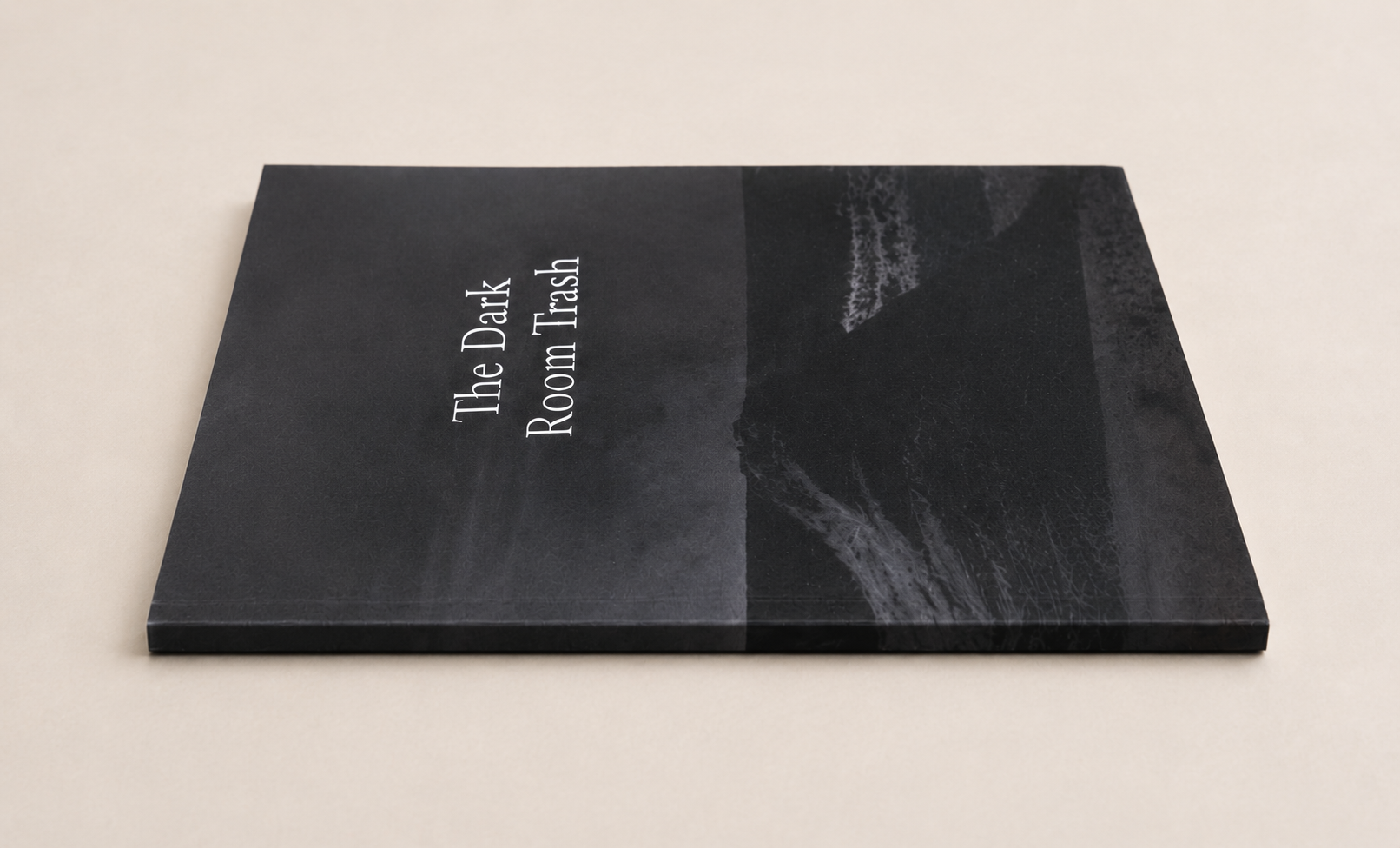
The book object, first developed from a binder of preserved darkroom discards.
Collection / Selection
The selection process was intuitive and curatorial. I was interested in the moments
where accident, chemistry, and image-making became inseparable: places where the paper
was falling apart, where the photograph was no longer fully legible, or where a mistake
revealed something more compelling than the intended print.
With permission from the class, I transformed the collection into a curated book. The
first edition was published by Crosstown Press in an edition of ten. Later, for the MoMA
PS1 Art Book Fair, I made a smaller zine edition with Ben Burton and Introspect LA
Press: a brief study in material, discard, ownership, and process.
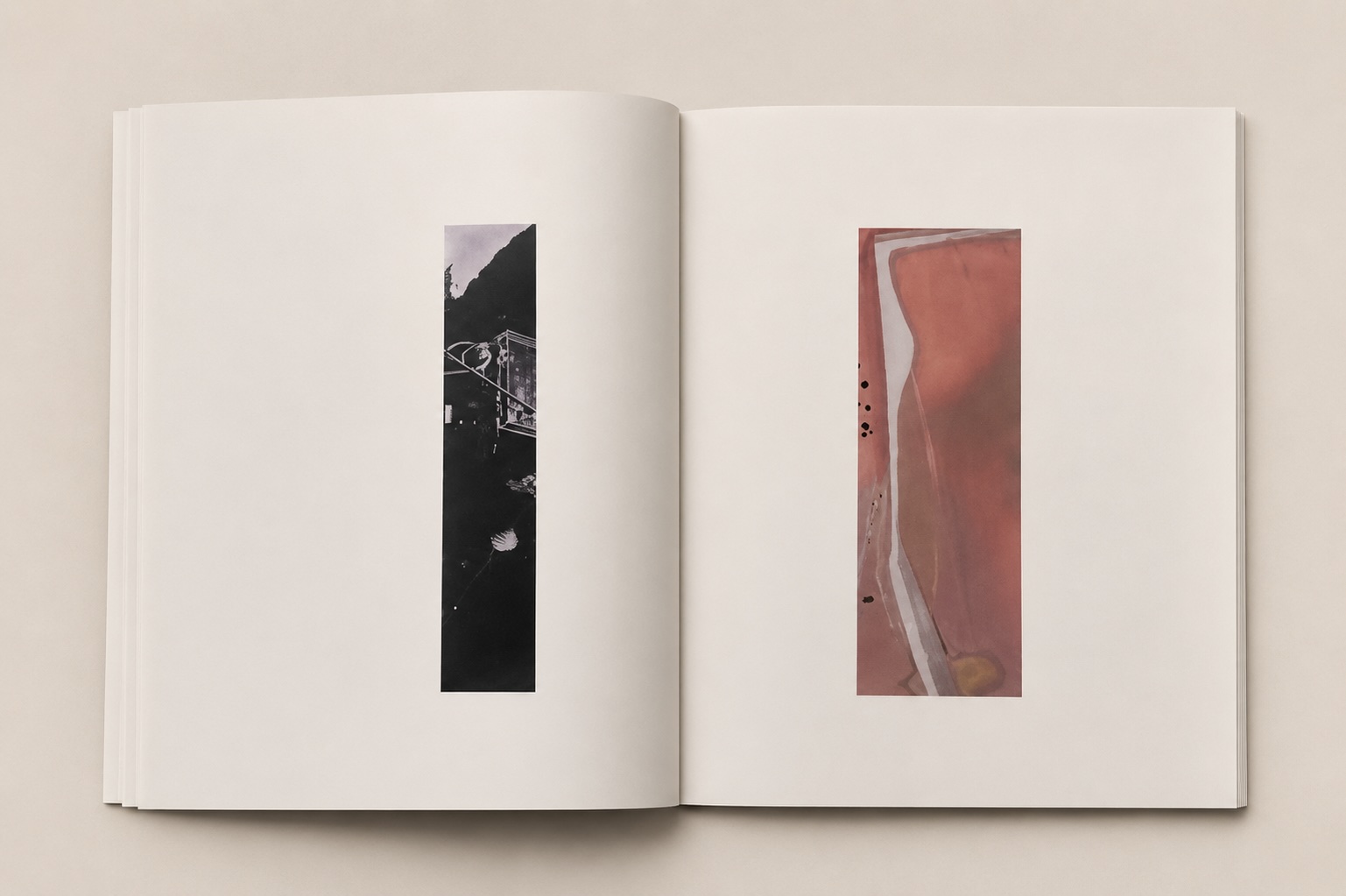
Paired fragments show the quiet scale and rhythm of the original test strips.
Book Object
The project moved through two forms. The first edition was glossy, magazine-like, and
made in a small run of ten. The second edition was smaller and more direct: a zine-sized
version made for the art book fair. Across both editions, the book became a way to hold
unstable photographic material still long enough to look at it closely.
Material
Making the work also became a way to understand the darkroom more closely: what stop and
fix do, how images shift when the process breaks down, and how accidental exposure can
change a print. The marks in the book are not decorative effects added later. They are
records of chemistry, time, mishandling, light, and interruption.
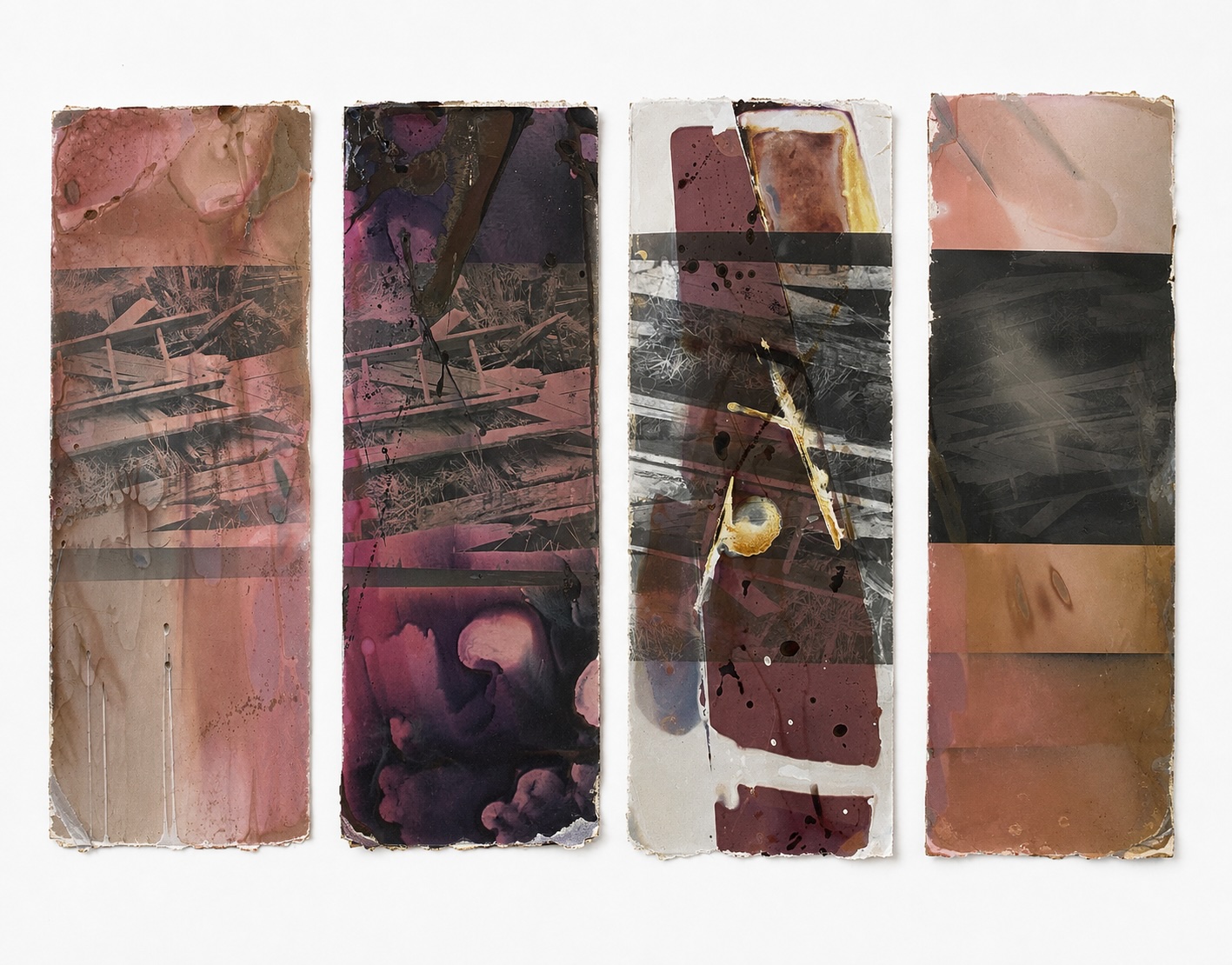
Collected source material before entering the book sequence.
Reflection
The project sits between found photography and intentional authorship. I did not make
the original exposures, but I did choose, preserve, sequence, and reframe them. What
began as trash became a question about ownership, process, and whether curation itself
can become a form of image-making.